Nobody taught you Word and it shows

I once spent a full day fixing the formatting on a 100-page policy document.
Multiple authors had worked on it, each with their own understanding of how Word works.
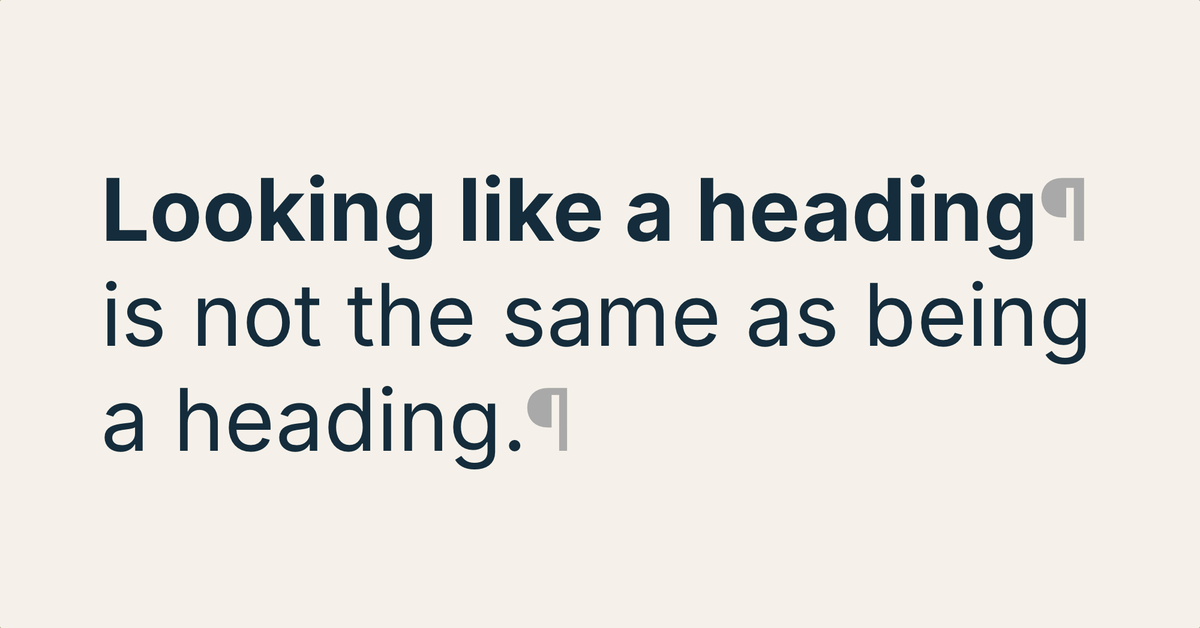
Some knew about Styles and used them properly. Others made text look like a heading by bumping up the font size and bolding it. Looking like a heading is not the same as being a heading, and the difference only shows up later: the table of contents had whole sections missing, because it only lists proper headings, not text that has been dressed up to resemble one.
Some used page breaks. Others hit Return repeatedly until the next line landed on a new page. That held up fine until someone edited a paragraph earlier in the document, and the text reflowed into nonsense, with long gaps opening up between lines for no visible reason.
And most of them had copied text in from somewhere else — an email, an old version, another document entirely — and pasted it straight in, formatting and all. Word doesn't just paste only text. It brings the source document's fonts, sizes and styles in with them, buried inside text that looks fine until you try to change anything. This is how a single document ends up with four fonts and styles that clash with each other, none of it visible to the person who put it there.
The fix for that last one is simple. Paste using Ctrl+Alt+V and choose 'Merge Formatting', so the text takes on the formatting of the document you're pasting into, not the one it came from. It takes a couple of extra seconds and would have prevented most of what I spent that day fixing.
None of the authors had turned on formatting marks, the setting that shows every paragraph break, space and tab as a visible symbol. Every hidden return, every manual space, every fake heading was invisible to them the whole time they were creating it. They could not see the problem because the tool was set up to hide it.
A day spent fixing formatting is a day not spent on the finance content the document actually exists to communicate. Multiply that across a team, across every long document that passes through several authors' hands, and it stops being a curiosity and starts being a real cost albeit one that is hidden — unless you need to hire an external person to fix the document.
This happens because document craft is never taught. Finance professionals spend years on technical standards and qualifications and almost no time on the tool they use to draft every report, paper and briefing. Everyone should know how to apply styles instead of faking their appearance, paste text without dragging its old formatting in behind it, and view the marks that show what's actually holding a document together. None of it is difficult. It has simply never been on anyone's curriculum.